
Beavis and Butt head story
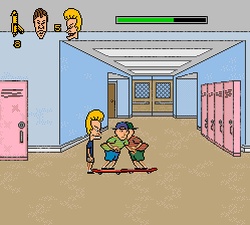
In the early ’90s, everything came down to the Mute button on the remote and that unmistakable “heh‑heh” coming from the TV. Beavis and Butt‑Head burst off MTV as loud as a school bell in an empty hallway. People wrote the name a dozen ways—“Beavis and Butt‑Head,” “Beavis & Butt‑Head,” even “Beavis and Butthead”—but the idea was the same: two eternal teens, the town of Highland, a burger joint, and a quest to make it to a GWAR concert. When a Super Nintendo cart with their mugs hit shelves, it felt like the show had literally jumped into your hands. That feeling was the hook—the reason players loved it then and still think fondly of it now.
From MTV to a cartridge
The SNES version’s origin story is a rare case where a publisher didn’t sand down a rowdy icon, but chased the actual voice. Viacom New Media grabbed the official license to Mike Judge’s cartoon and tapped Realtime Associates. The brief was simple: don’t just paste familiar faces onto sprites—bring the giggles, dumb ideas, and Highland’s vibe to Super Nintendo. The 1994 release feels very “television”—not in graphics, but in tone. Like you’re watching an extra‑long episode, only the remote is a controller.
The team soaked in the source: stacks of episode tapes, notebooks full of stupid one‑liners, and Beavis’s zoned‑out TV‑stare “tss‑tss.” The plot keeps it fan‑friendly: GWAR tickets, somehow shredded and scattered across Highland instead of sitting safe in a pocket. You get Burger World, where the boys flip patties hoping the boss won’t notice; Highland High, where every locker is a mini adventure; and Turbo Mall 2000, a dream mall for aimless wandering and snarky commentary. The structure plays like a stroll through a familiar neighborhood: step left, a joke; step right, another harebrained scheme.
Voices, gags, and the ’90s vibe
An official license meant the good stuff—catchphrases and the signature “uhh… heh‑heh” were fair game. Voice samples made it onto the cart, instantly cementing the vibe: this is Beavis & Butt‑Head, not a knockoff. The artists kept that deliberately sloppy, cartoony linework—the kind that looks hand‑drawn, not slick and sterile. Between stages you get quick cutscenes dripping with MTV attitude: jittery animation, acidic delivery, winking Easter eggs—maybe a GWAR poster tucked in the background, maybe Mr. Anderson shuffling past with a “what did you idiots do now” face. Even the manual under those grumpy mugs on the box was laid out with a grin: little doodles, snarky captions—the whole package.
Why did players dig it? Because it’s recognizably them without a shiny coat of polish. It’s not about chasing high scores or “conquering peaks”—it’s the feeling of hanging out with two knuckleheads who can barely manage a locker door. The SNES build leans on mood and memory: you hear a cassette player click somewhere in your head, feel Burger World’s sticky floor, and see Highland as both silly and cozy. It’s that rare licensed game that isn’t just a tie‑in but a slice of the show’s bigger story—another episode, pressed onto a cartridge.
How the game made the rounds
In the U.S., Beavis and Butt‑Head on Super Nintendo hit shelves fast—magazine previews, making‑of blurbs, and the MTV hype machine did the heavy lifting. Rental stores lined up boxes with loud cover art, kids sprinted home, and the next day they traded locker‑by‑locker routes through Highland High. Europe played out much the same: the show’s cult status pulled the game along. Elsewhere the road zigzagged: first bootleg VHS tapes, later MTV Russia, and carts surfacing via friends, swap clubs, and flea markets. Emulators followed, and Beavis & Butt‑Head made the rounds again—some searched “Beavis and Butthead SNES,” others “Beavis & Butt‑Head Super Nintendo.” People swapped secrets and Easter eggs, argued over the best spots in Highland to snag those ticket scraps, and remembered meeting GWAR as the final brushstroke on a teenage dream.
And that’s how the game settled into memory—right alongside VHS tapes, pencil‑case stickers, and the smell of a fresh plastic box. For many, this retro isn’t about old hardware so much as a ’90s mood: shamelessly goofy, a little mischievous, and warm. Beavis & Butt‑Head on SNES held up because of its atmosphere. It never tried to be a grand saga; it stayed itself—a string of moments that add up to an adventure: a quick exchange, a dumb plan, a familiar corner of Highland. Even now, whether you fire up the cart or its digital shadow, that feeling comes back. You know GWAR’s ahead, the laughs are back, and that same little town is waiting—where trouble sounds like music to two heroes who are eternal in their stupidity and their freedom.
And yeah, whatever you call them—“Beavis and Butthead,” “Beavis & Butt‑Head,” or the hyphen‑correct “Beavis and Butt‑Head”—they feel right on Super Nintendo. It’s one of those times when the name is just a sign on the door, and inside is the living, recognizable energy that keeps pulling us back to Highland again and again.